Rapid Security Patching Across Hundreds of Servers and Thousands of Sites
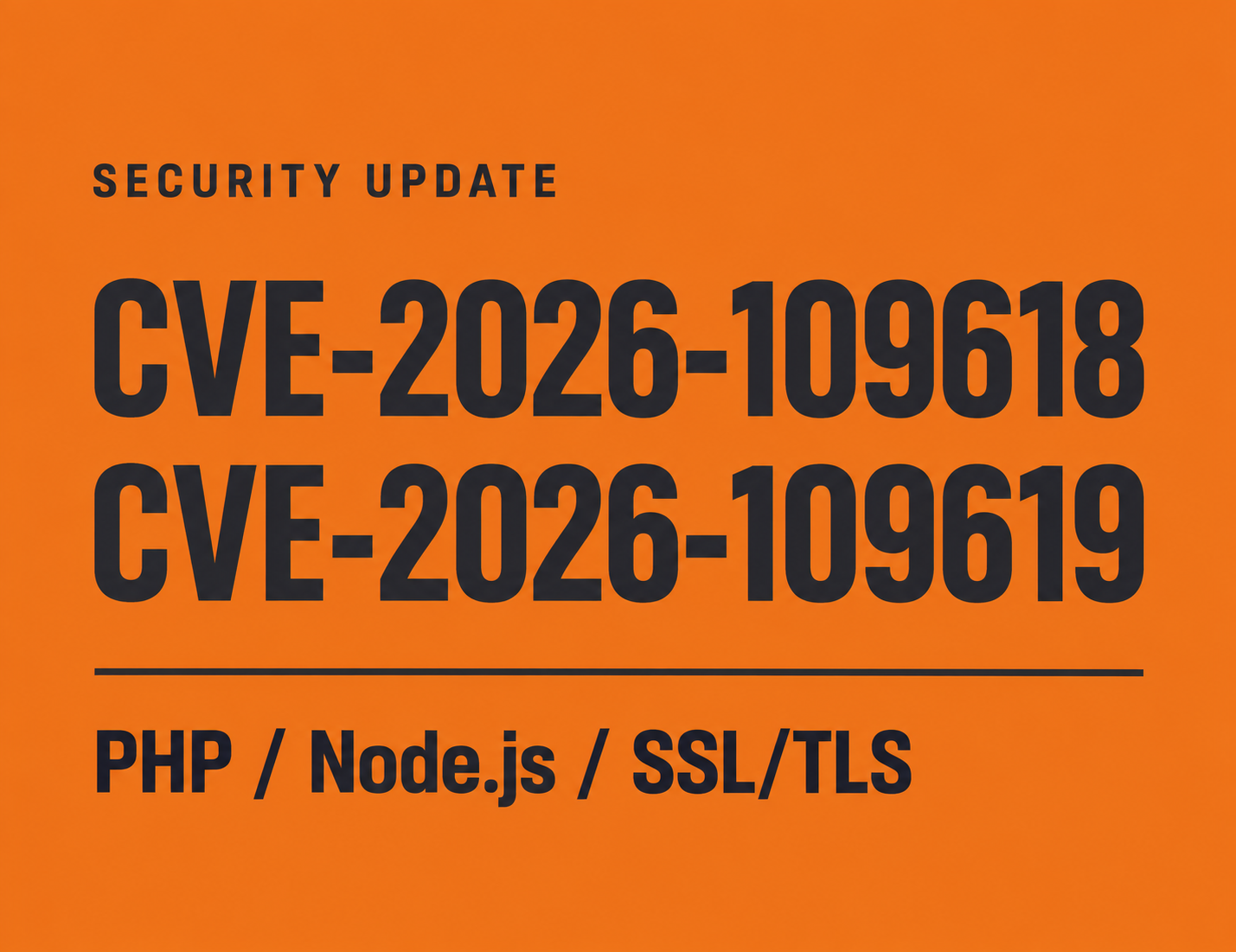
At a glance
- Rapid security response across hundreds of servers and thousands of apps and sites.
- Custom patches for legacy systems and locally hosted updates to bypass download delays.
- A full security audit to verify patch effectiveness.
When major security vulnerabilities emerge, responding quickly is only part of the challenge. Fixes must be tested, deployed across different environments, and verified—including on legacy systems that no longer receive official updates.
Over the past two days, our DevOps team responded to urgent security disclosures affecting PHP, Node.js, and SSL/TLS infrastructure. Across hundreds of servers and thousands of applications and websites, the team began responding within minutes of patches becoming available, working overnight across our infrastructure and customer facilities.
The vulnerabilities behind the response
The PHP releases addressed CVE-2026-109618 and CVE-2026-109619, two critical vulnerabilities that can allow unauthenticated remote code execution. Fixes were released on October 21, 2026.
Node.js also issued security updates on October 21, addressing vulnerabilities including remote code execution in its Brotli decoder and weaknesses in TLS certificate hostname verification.
For our team, the priority was turning those releases into tested, deployed fixes across the environments we support.
Supporting legacy systems and overcoming update bottlenecks
The response extended beyond systems receiving official patches. Our team built custom packages incorporating the fixes for legacy systems that had not received official releases, bringing those environments into the remediation effort.
Heavy demand also overwhelmed official update sources, creating hours-long download queues. To keep deployments moving, the team hosted copies of the required updates and distributed them across affected environments.
This combination of preparation, custom packaging, and coordinated deployment helped the team address both the vulnerabilities and the practical obstacles to patching at scale.
Verifying the work
After deployment, the team completed a full security audit to verify patch effectiveness and check for signs of compromise.
Installing an update is a milestone. Confirming that it addresses the vulnerability is what completes the response.
Recognizing the team behind the response
This effort required technical judgment, coordination, and ownership—from preparing and testing patches to supporting legacy environments and validating the results.
We’re proud of our DevOps team for meeting that challenge and grateful for the care they bring to the systems our customers depend on.
Huge shoutout to our world-class DevOps team; proud to work alongside this crew!
Hundreds of servers. Thousands of apps and sites. Two days of urgent security response. One exceptional DevOps team.
Within minutes of patch releases, our team was responding and patching across our infrastructure and customer facilities.
They built custom patch packages for legacy systems without official releases, hosted update copies to bypass hours-long queues, and completed a full security audit to verify patch effectiveness.
Speed, ingenuity, and ownership at scale. Huge shoutout to our world-class DevOps team—proud to work alongside this crew! ?
#NYN #DevOps #CyberSecurity #TeamExcellence